GHK-Cu anti-aging research


GHK-Cu: The "Blue Gold" of Cosmetic Research
In 1973, Dr. Loren Pickart made a discovery that would eventually reshape our understanding of skin regeneration and tissue repair. While studying human plasma, he isolated a small peptide that seemed to play an outsized role in healing and cellular renewal. That peptide, glycyl-L-histidyl-L-lysine (GHK), and its copper-bound form GHK-Cu, has since become one of the most extensively studied naturally occurring compounds in regenerative medicine.
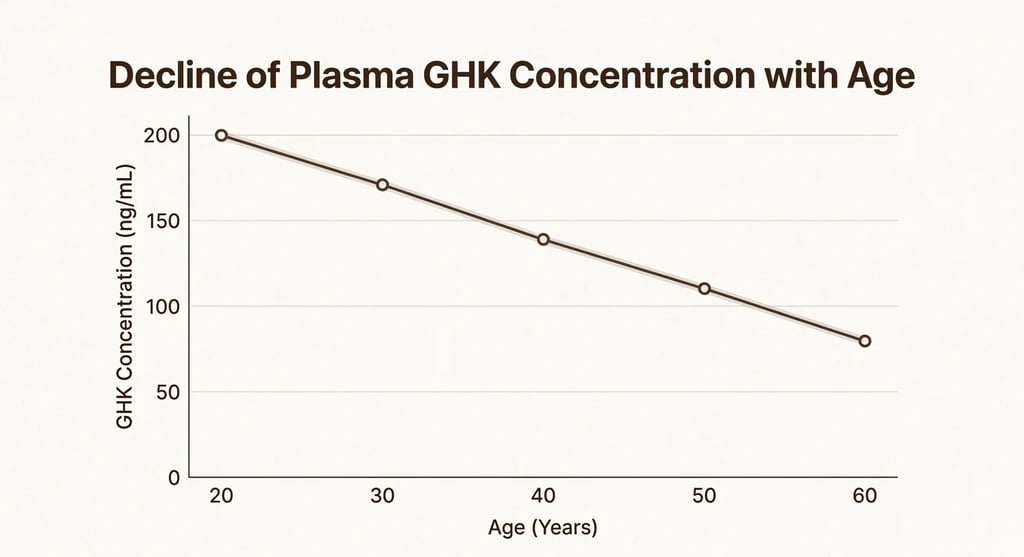
Here's what makes this story particularly compelling: GHK isn't some exotic synthetic compound. It's already in your body right now, circulating in your plasma, saliva, and urine. But here's the catch. Your GHK levels drop dramatically as you age. At age 20, your plasma contains roughly 200 ng/mL of GHK. By age 60, that level falls to about 80 ng/mL. This decline mirrors the reduced regenerative capacity we associate with aging.
Over the past four decades, researchers have published hundreds of studies on GHK-Cu, documenting its effects on approximately 4,000 human genes (about 20% of the genome), its ability to stimulate collagen production, and its remarkable safety profile. This article synthesizes the key findings from peer-reviewed research to give you a clear, evidence-based understanding of what GHK-Cu actually does, what the clinical data shows, and where the research is heading.
What is GHK-Cu and how does it work?
Molecular structure and natural occurrence
GHK-Cu is a tripeptide, meaning it consists of three amino acids linked together: glycine, histidine, and lysine. When bound to a copper ion, it forms the copper complex known as GHK-Cu or copper peptide GHK-Cu. The free peptide has a molecular weight of 340.38 Daltons, while the copper complex weighs in at 403.94 Daltons.
Your body produces GHK naturally, and it's found in human plasma, saliva, and urine. The peptide has a high affinity for copper ions, which is significant because copper plays essential roles in collagen synthesis, wound healing, and antioxidant defense. GHK acts as a copper carrier, facilitating the transport of copper into cells where it's needed for various biological processes.
Mechanism of action: Gene expression modulation
Perhaps the most remarkable finding in GHK-Cu research is its effect on gene expression. Studies have shown that GHK-Cu affects approximately 4,000 human genes, which represents about 20% of the human genome. This isn't just a minor biological tweak. It's a substantial reprogramming of cellular behavior.
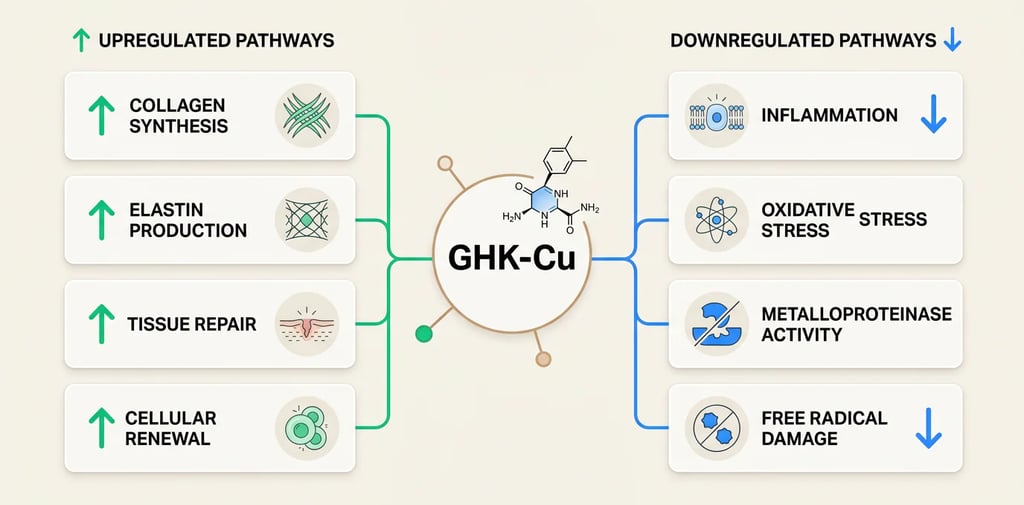
The peptide appears to reset gene expression patterns to more youthful states. It upregulates genes involved in tissue repair and regeneration while downregulating genes associated with inflammation and tissue breakdown. This dual action (promoting repair while suppressing damage) is part of what makes GHK-Cu so interesting to researchers studying aging and tissue regeneration.
Key cellular pathways affected
GHK-Cu's effects aren't limited to gene expression. It also modulates several critical cellular signaling pathways:
TGF-beta activation: This pathway is crucial for tissue regeneration and wound healing. GHK-Cu stimulates TGF-beta production, which in turn promotes fibroblast activity and extracellular matrix formation.
NF-κB suppression: The NF-κB pathway drives inflammation. By suppressing this pathway, GHK-Cu reduces inflammatory responses that can damage tissue over time.
p38 MAPK modulation: This pathway is involved in cellular stress responses. GHK-Cu's effects here contribute to its anti-inflammatory properties.
Integrin synthesis: Integrins are cell surface receptors that help cells adhere to their surroundings and communicate with each other. Increased integrin synthesis improves cell migration and tissue organization.
Clinical research on skin aging and regeneration
Collagen and extracellular matrix effects
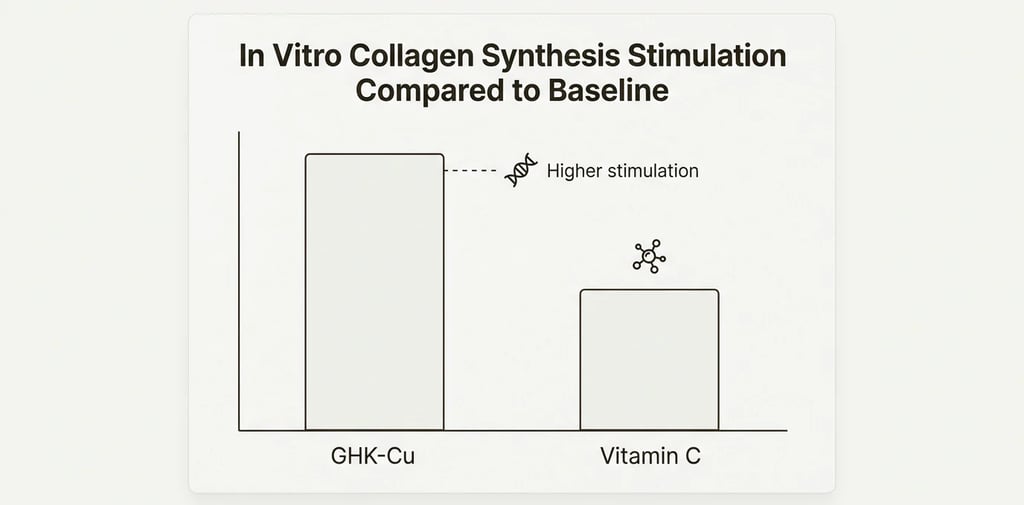
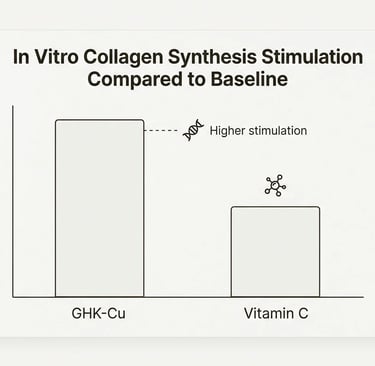
The evidence for GHK-Cu's effects on collagen synthesis is among the strongest in the peptide research literature. In vitro studies have demonstrated that GHK-Cu increases collagen production by approximately 70%. For comparison, vitamin C, long considered the gold standard for collagen support, shows about a 50% increase under similar conditions.
But collagen isn't the only extracellular matrix component affected. GHK-Cu also stimulates synthesis of:
Elastin: The protein that gives skin its elasticity
Glycosaminoglycans: Including hyaluronic acid, which helps skin retain moisture
Proteoglycans: Molecules that support skin structure and hydration
Clinical studies have documented measurable improvements in skin density and thickness following GHK-Cu application. These aren't just cosmetic changes. They represent real structural improvements in the skin's extracellular matrix.
Wrinkle reduction and skin texture studies
What does this mean in practical terms? Clinical observations show a predictable timeline for GHK-Cu effects on skin:
First two weeks: Users typically notice improved skin hydration, reduced redness, and smoother texture
After 1-2 months: Fine lines and wrinkles begin to fade as skin texture and elasticity improve
These effects appear to result from increased keratinocyte proliferation (the main cells of the epidermis) and enhanced fibroblast activity in the dermis. Dermatologists who recommend GHK-Cu typically suggest once-daily application for optimal results.
Wound healing and tissue repair applications
Beyond cosmetic applications, GHK-Cu has shown significant promise in wound healing research. Clinical studies have documented accelerated wound closure and improved scar quality when GHK-Cu is applied to healing tissue. These effects likely stem from the peptide's ability to enhance stem cell function and promote organized tissue regeneration rather than chaotic scar formation.
Beyond skin: Systemic research findings
Hair growth and follicle stimulation
GHK-Cu's regenerative effects extend beyond skin tissue. Research has shown that the peptide stimulates hair follicle growth and increases follicle size. This has led to interest in its potential applications for androgenetic alopecia and other forms of hair loss.
The mechanism appears to involve improved blood flow to hair follicles and enhanced cellular energy production, creating conditions that support healthy hair growth cycles.
Anti-inflammatory and cognitive research
The anti-inflammatory effects of GHK-Cu have been documented in several research contexts:
COPD tissue repair: Studies have explored GHK-Cu's potential to repair lung tissue damaged by chronic obstructive pulmonary disease
Cognitive function: Mouse studies have shown cognitive improvement in aging animals treated with GHK-Cu
Systemic inflammation: The peptide's NF-κB suppression effects suggest potential applications for managing chronic inflammatory conditions
These findings point to GHK-Cu as more than just a skin care ingredient. It may represent a broader approach to addressing age-related tissue dysfunction.
Emerging research directions
Current research is exploring several promising frontiers:
Anti-cancer properties: Some studies suggest GHK-Cu's gene expression effects may help suppress cancer-promoting pathways
Regenerative medicine: Applications in tissue engineering and organ repair are being investigated
Stem cell therapies: Enhancing stem cell function for various therapeutic applications
Delivery methods and bioavailability research
Topical application and skin permeation
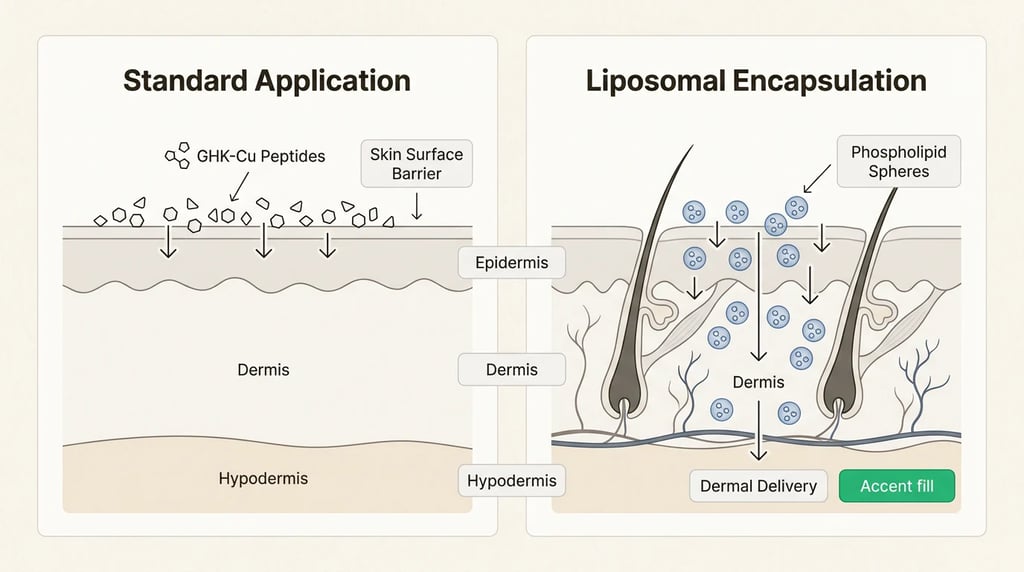
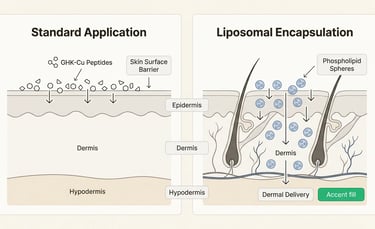
Getting GHK-Cu into the skin where it can act on dermal cells requires careful formulation. Research has shown that liposomal encapsulation significantly enhances skin permeation and bioavailability compared to non-liposomal formulations.
Liposomes are microscopic spheres made of phospholipids that can encapsulate active ingredients and ferry them through the skin barrier. Studies have demonstrated that liposomal GHK-Cu reaches deeper skin layers more effectively than standard formulations.
Typical concentrations in topical products range from 0.5% to 2%, though research is ongoing to determine optimal dosing for various applications.
Injectable and alternative delivery routes
For systemic effects or deeper tissue penetration, subcutaneous injection protocols have been studied. These methods bypass the skin barrier entirely, delivering GHK-Cu directly into tissue where it can enter circulation.
Oral bioavailability remains a significant research gap. The digestive system appears to break down GHK-Cu before it can be absorbed, limiting the effectiveness of oral supplementation. This is why most clinical research focuses on topical and injectable delivery methods.
Safety profile and regulatory status
Documented safety and side effects
GHK-Cu has an extensive safety record spanning over 40 years of research. As a naturally occurring peptide found in human plasma, it has a low toxicity profile. Clinical studies have consistently shown it to be well-tolerated.
Potential side effects are rare and typically mild:
Skin irritation: Occasional redness or irritation at application sites (uncommon)
Interaction concerns: Some dermatologists recommend avoiding simultaneous use with strong acids or high-strength vitamin C, as these may affect peptide stability
Retinoid interactions: Alternating GHK-Cu with retinoids (rather than layering them together) is often recommended
Dermatologist recommendations
Dermatologists who recommend GHK-Cu typically suggest:
Once-daily application for most users
Avoiding simultaneous use with strong acids or high-strength vitamin C
Alternating nights with retinoids rather than layering them together
Consistent use for 1-2 months before evaluating results
FDA status and research classification
It's important to understand the regulatory status of GHK-Cu. The peptide isn't FDA-approved specifically for anti-aging or cosmetic applications. It's classified as a research chemical, which means it's available for laboratory and research use.
However, GHK-Cu's status as a naturally occurring peptide provides some regulatory flexibility. It's used in supervised medical protocols for skin health and wound healing applications.
Safety profile and regulatory status
Documented safety and side effects
GHK-Cu has an extensive safety record spanning over 40 years of research. As a naturally occurring peptide found in human plasma, it has a low toxicity profile. Clinical studies have consistently shown it to be well-tolerated.
Potential side effects are rare and typically mild:
Skin irritation: Occasional redness or irritation at application sites (uncommon)
Interaction concerns: Some dermatologists recommend avoiding simultaneous use with strong acids or high-strength vitamin C, as these may affect peptide stability
Retinoid interactions: Alternating GHK-Cu with retinoids (rather than layering them together) is often recommended
Dermatologist recommendations
Dermatologists who recommend GHK-Cu typically suggest:
Once-daily application for most users
Avoiding simultaneous use with strong acids or high-strength vitamin C
Alternating nights with retinoids rather than layering them together
Consistent use for 1-2 months before evaluating results
FDA status and research classification
It's important to understand the regulatory status of GHK-Cu. The peptide isn't FDA-approved specifically for anti-aging or cosmetic applications. It's classified as a research chemical, which means it's available for laboratory and research use.
However, GHK-Cu's status as a naturally occurring peptide provides some regulatory flexibility. It's used in supervised medical protocols for skin health and wound healing applications.
Key takeaways from GHK-Cu research
After reviewing decades of peer-reviewed research, several conclusions emerge clearly:
Strongest evidence: The data supporting GHK-Cu's effects on gene expression (4,000+ genes), collagen synthesis (70% increase in vitro), and safety profile is robust and well-documented across multiple studies.
Clinical applications: Skin regeneration, wound healing, and hair growth show the most promise based on current research. Systemic applications are promising but require more investigation.
Research limitations: Large-scale human clinical trials are still needed, particularly for long-term safety and efficacy. Oral bioavailability remains a challenge. Optimal dosing protocols for various applications need further refinement.
Future directions: Anti-inflammatory applications, cognitive research, and regenerative medicine represent exciting frontiers that are just beginning to be explored.
The bottom line? GHK-Cu represents one of the most scientifically grounded peptides in the regenerative medicine space, with a research history that spans over four decades and includes some of the most compelling gene expression data of any naturally occurring compound.
Frequently Asked Questions
What does the current GHK-Cu anti aging research say about timeline for visible results?
Clinical observations and user reports suggest a two-phase timeline. Within the first two weeks, most users notice improved skin hydration and reduced redness. Fine lines and wrinkle reduction typically become visible after 1-2 months of consistent use as collagen synthesis and skin remodeling progress.
Are there any side effects documented in GHK-Cu anti aging research studies and findings?
Research spanning over 40 years shows GHK-Cu has a strong safety profile with minimal side effects. As a naturally occurring peptide found in human plasma, it's generally well-tolerated. Rare side effects include mild skin irritation or redness at application sites. Some dermatologists recommend avoiding simultaneous use with strong acids or vitamin C.
How do the GHK-Cu anti aging research studies explain its mechanism of action?
Research shows GHK-Cu works through multiple mechanisms: it affects approximately 4,000 human genes (resetting expression to more youthful patterns), activates TGF-beta pathway for tissue regeneration, suppresses NF-κB to reduce inflammation, and stimulates collagen production by approximately 70% in vitro studies.
What delivery methods does GHK-Cu anti aging research support most strongly?
The strongest clinical evidence supports topical application (particularly liposomal formulations for enhanced skin penetration) and subcutaneous injection for systemic effects. Oral bioavailability is limited due to digestive breakdown. Topical concentrations typically range from 0.5% to 2% in research applications.
Has GHK-Cu been FDA approved based on current research findings?
GHK-Cu is not FDA-approved specifically for anti-aging or cosmetic applications. It is classified as a research chemical intended for laboratory and research use. However, its naturally occurring status and extensive safety data have led to its use in supervised medical protocols for skin health and wound healing applications.
What are the most promising applications beyond skin aging in current GHK-Cu research?
Beyond skin regeneration, research is exploring GHK-Cu for hair growth stimulation (increased follicle size and growth), COPD tissue repair, cognitive function improvement in aging (mouse studies), systemic anti-inflammatory effects, and potential anti-cancer properties through gene expression modulation.
How does GHK-Cu compare to other anti-aging ingredients in research studies?
In vitro studies show GHK-Cu increases collagen production by approximately 70%, compared to about 50% for vitamin C. Unlike many antioxidants that work through direct free radical scavenging, GHK-Cu acts primarily through gene expression modulation and cellular pathway regulation, affecting approximately 4,000 genes involved in tissue repair and inflammation.
© 2026 LKpeptide. All rights reserved.